

Viorant Hub
Compose your AI system locally.
Hub is an optional local-first workspace for authoring and inspecting the prompts, skills, memory, agents, policies, and other artifacts composed in a portable .vio system definition.
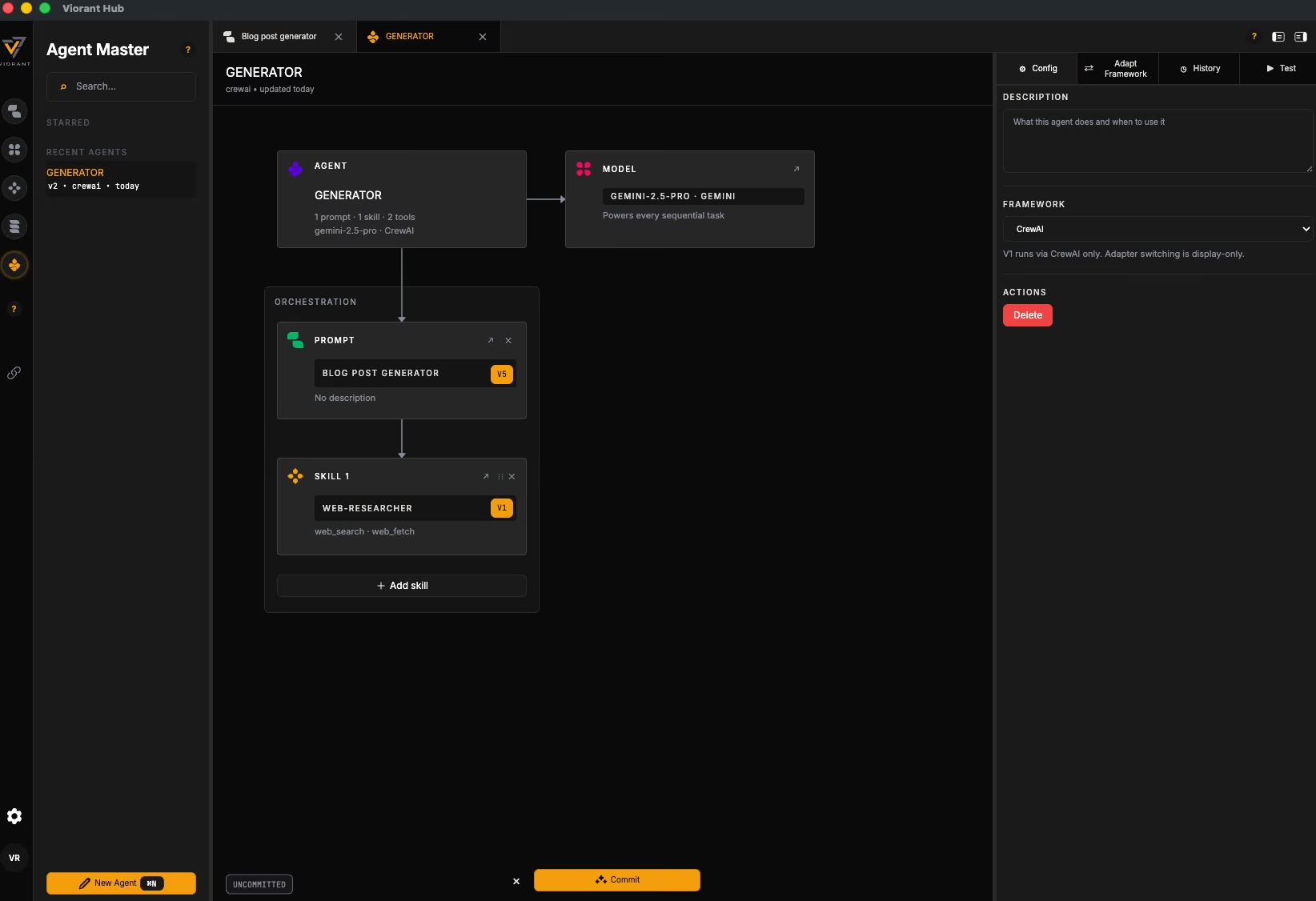
Designed for builders.
Built for control.
Hub keeps authoring, testing, provider keys, and artifact preparation local. The output is a portable .vio bundle, not a dashboard state you have to trust.
The Hub workspace.
One source for AI assets.
Edit the .vio contract, inspect attached files, test behavior, and keep provenance visible before any artifact leaves your machine.
Author with clarity.
Test with evidence.
Prepare with control.
Hub turns local AI work into a versioned system definition that can be reviewed, checked by Trust when policy requires it, and handed to Helix, CI/CD, or another supported workflow.
$ viorant run support-triage.vio --case happy_path
Loading artifact...
Running unit tests...
Running quality gates...
Running safety checks...
Running regression...
All checks passed ✓
Portable .vio bundle prepared.
Output: ./output/support-triage/

Build once.
Reuse everywhere.
Hub prepares the same artifact for local runs, signed repositories, CI/CD, Helix, or another compatible runner.
 .vio
artifact
.vio
artifact
 Helix or CI/CD
Built for the handoff
between builders and production.
Hub gives each role a readable artifact instead of another opaque console. The same .vio file can be reviewed by engineers, security, and leadership.
See which prompt, tool, model route, connector, and policy are attached before the artifact leaves the workstation.
Iterate locally, compare providers with your own keys, and keep behavior changes tied to a versioned .vio bundle.
Trace what changed, who prepared it, and which artifact is ready for signing or deployment.
Frequently asked questions.
01Is the Hub in my execution path?+
02Where do my API keys live?+
03Do I need an API key to start?+
04Which models and providers are supported?+
05Does the Hub work offline?+
06What can I manage in Hub?+
07How is this different from an LLM gateway?+